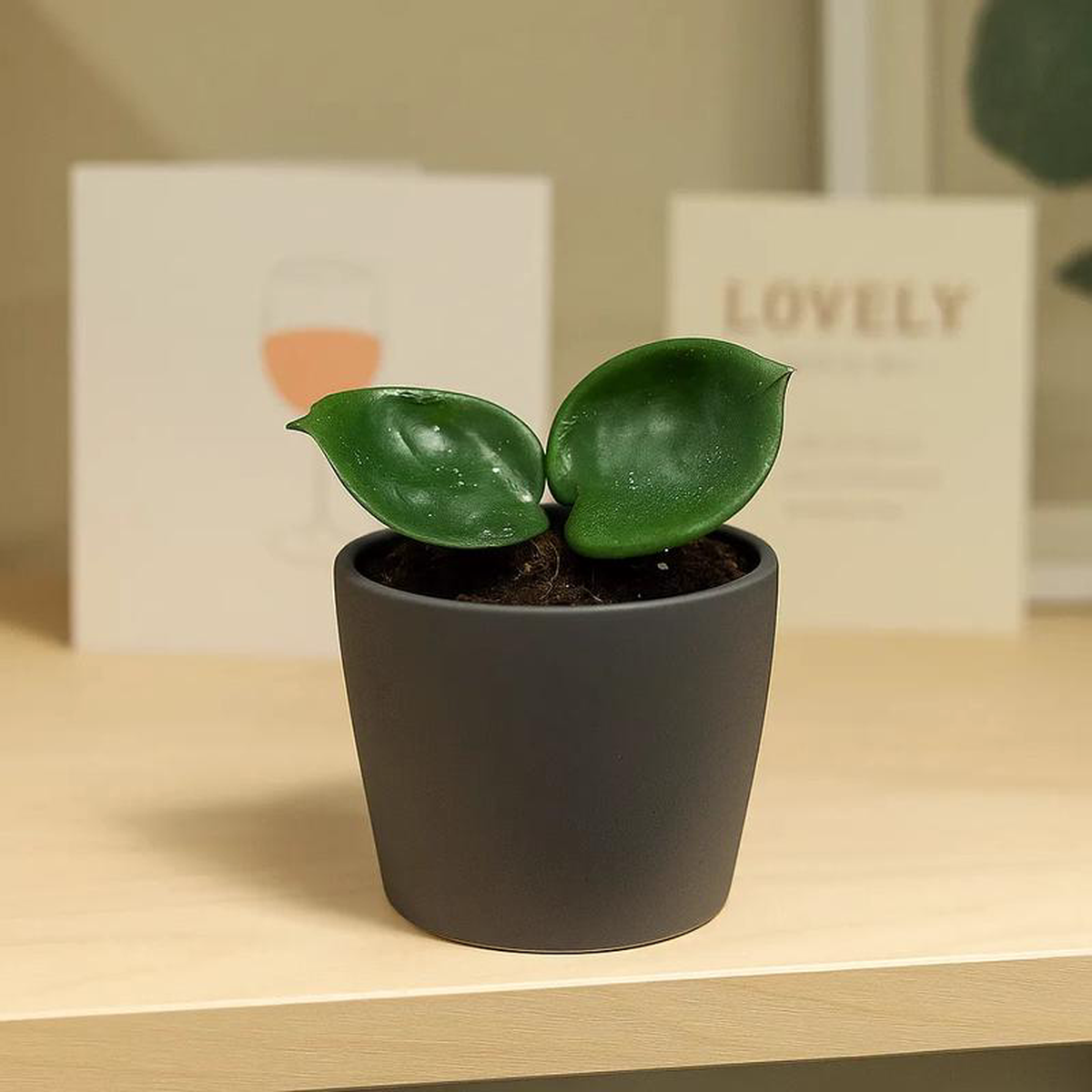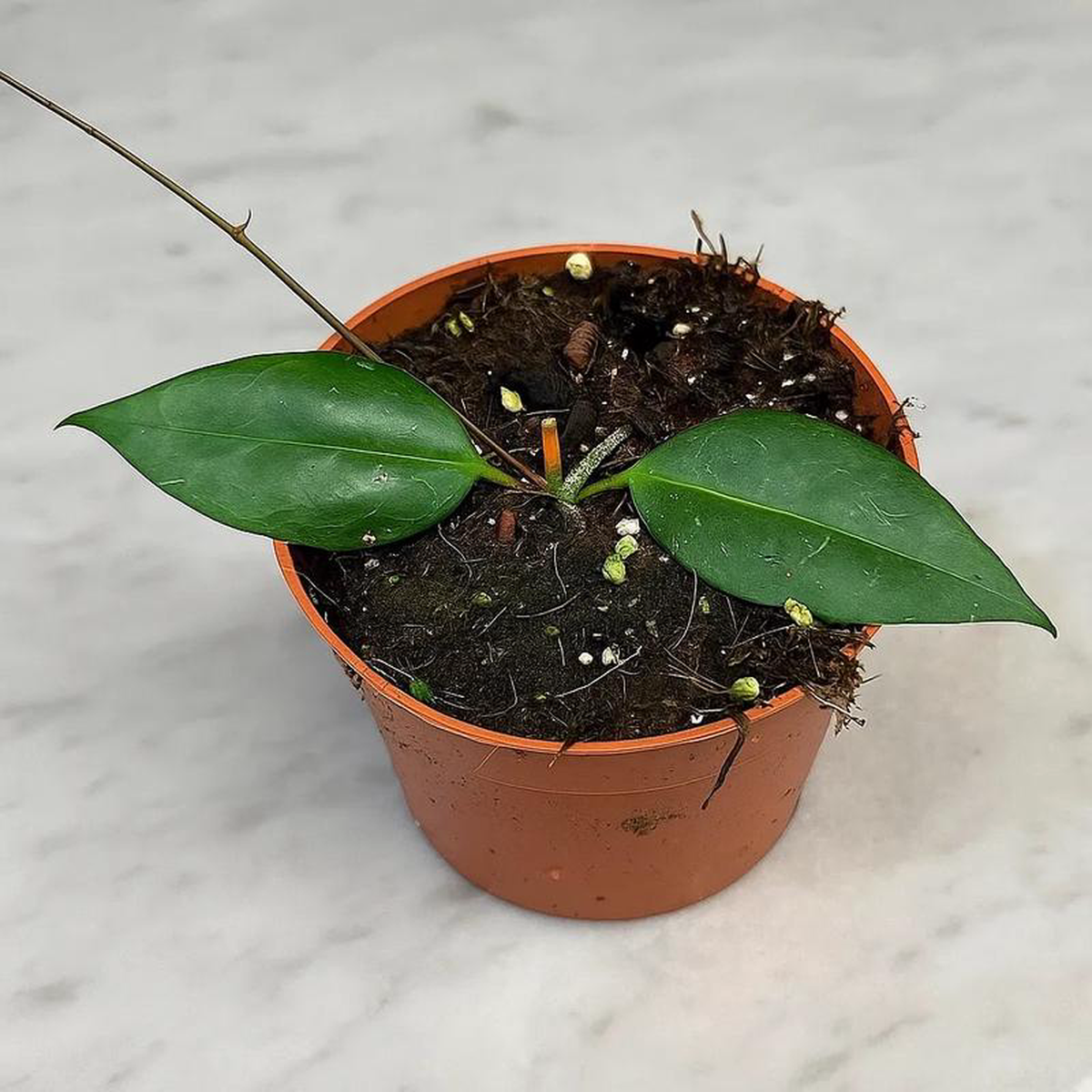
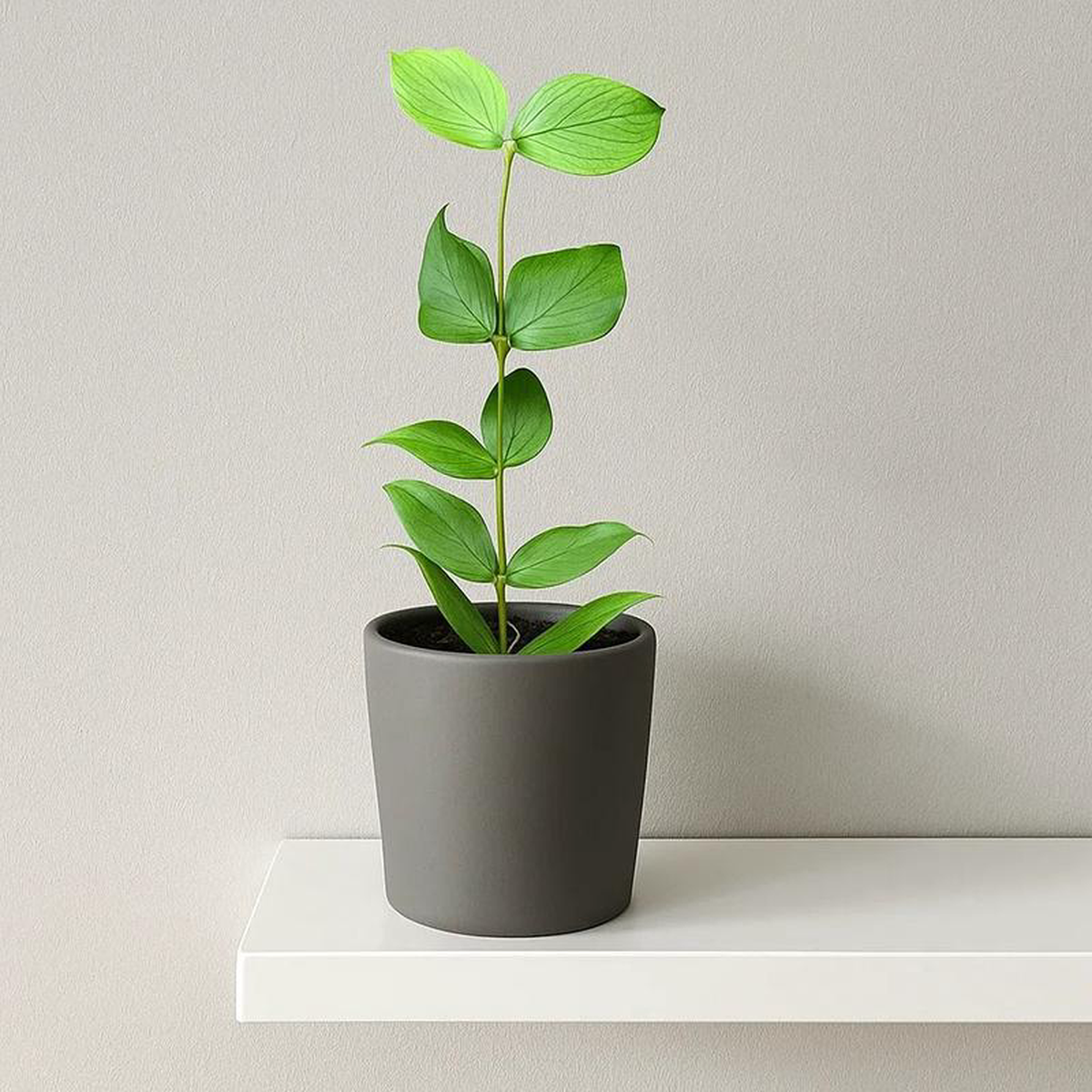
Description Reviews Description: Hoya polyneura, known as the Fish Tail Hoya, is a rare and elegant species from the Apocynaceae family, native to the cool, mountainous forests of the Himalayas and Northeast India. Unlike many Hoyas with thick, waxy leaves, this species has slender, textured foliage with striking venation that gives it a delicate, graceful appearance. The leaves are lanceolate and narrow, typically 815 cm long, with prominent pale-green veins that run parallel from base to tip. This distinctive pattern resembles the tail of a fish, giving rise to its popular name. Mature plants produce clusters of creamy-yellow, star-shaped flowers with rosy centres, which are sweetly fragrant and long-lasting. With its trailing or climbing growth habit, Hoya polyneura is perfect for hanging baskets, cascading from shelves, or being trained up trellises. Its refined form makes it a favourite among serious Hoya collectors. Hoya polyneura Care Guide Light Thrives in bright, indirect light. It can tolerate some gentle morning or late-afternoon sun but should be protected from harsh midday rays. Too little light may prevent flowering. Watering Water when the top 23 cm of soil feels dry. Unlike thick-leaved Hoyas, polyneura does not store as much water, so it prefers more consistent moisture though still never soggy soil. Reduce watering slightly in winter. Temperature and Humidity Temperature: Prefers cooler conditions than many Hoyas, around 1526C. Avoid draughts and keep above 12C. Humidity: High humidity (6080%) is essential. Mist regularly, use a humidifier, or grow in a greenhouse/terrarium to replicate its natural environment. Soil and Potting Use a chunky, free-draining epiphytic mix such as peat-free compost blended with orchid bark, perlite, and coco coir. A shallow pot works well, as Hoyas like to be slightly root-bound. Repot every 23 years. Feeding Feed every 46 weeks in spring and summer with a balanced fertiliser, switching to a high-potassium formula when encouraging flowers. Pruning and Maintenance Trim long vines lightly to maintain shape. Do not remove the flower peduncles (spurs), as Hoyas bloom repeatedly from the same points. Growth and Maturity A moderately fast grower, trailing 12 metres in ideal conditions. Blooms may appear on mature plants in warm, bright, and humid conditions. Common Issues Leaf curl/browning: Low humidity or underwatering. Yellow leaves: Overwatering. Failure to flower: Often caused by insufficient light. Pests: May attract mealybugs or spider mites. Background and Benefits Unlike many tropical Hoyas, Hoya polyneura grows in cooler, high-altitude forests, which is why it requires higher humidity and slightly cooler conditions than most. Its elegant fish-tail foliage makes it a highly desirable ornamental plant, and its sweetly fragrant flowers are an added reward for patient growers. Quick Care Summary Light: Bright, indirect; gentle morning sun tolerated Water: Keep lightly moist; allow topsoil to dry slightly Temperature: 1526C; protect below 12C Humidity: High (6080%); mist or humidify Soil: Chunky, well-draining epiphytic mix Feed: Monthly in spring/summer; high-potassium for blooms Growth: Trailing or climbing vine with fish-tail patterned leaves; clusters of fragrant starry flowers (0 ) Reviews: No reviews yet. Be the first to review! Write a Review Your email address will not be published. Required fields are marked. You must be logged in to post a review.